What is blockchain technology? An easy-to-understand guide for crypto beginners

Blockchain is a "ledger" for recording transactions where multiple computers maintain identical copies. The network uses cryptography and a consensus mechanism so that everyone can validate records, making it extremely difficult to secretly alter history.
For new crypto investors, understanding blockchain helps you read transaction statuses (pending/confirmed), understand why fees fluctuate, and avoid errors like sending to the wrong network.
What is blockchain and why should new investors care?
According to NIST, a blockchain is a distributed digital ledger that is tamper-evident and tamper-resistant, typically operating without a central data repository; transactions are grouped into "blocks" and linked together using hashes to form a chain.
Three practical things you should remember:
Sending to the wrong address or network may be irreversible.
Whoever holds the private key/seed phrase is generally the one in control of the assets in the wallet.
Each chain is a different "ledger system" (having the same token name does not mean you can transfer it between them).
When reading articles on "blockchain technology 2026," focus on three questions: how safe is it, what are the fees & speeds, and who has the right to participate/control the network?
How does blockchain work?
Three simple building blocks
Digital signatures: prove "who" created the transaction (similar to a signature, but using cryptography).
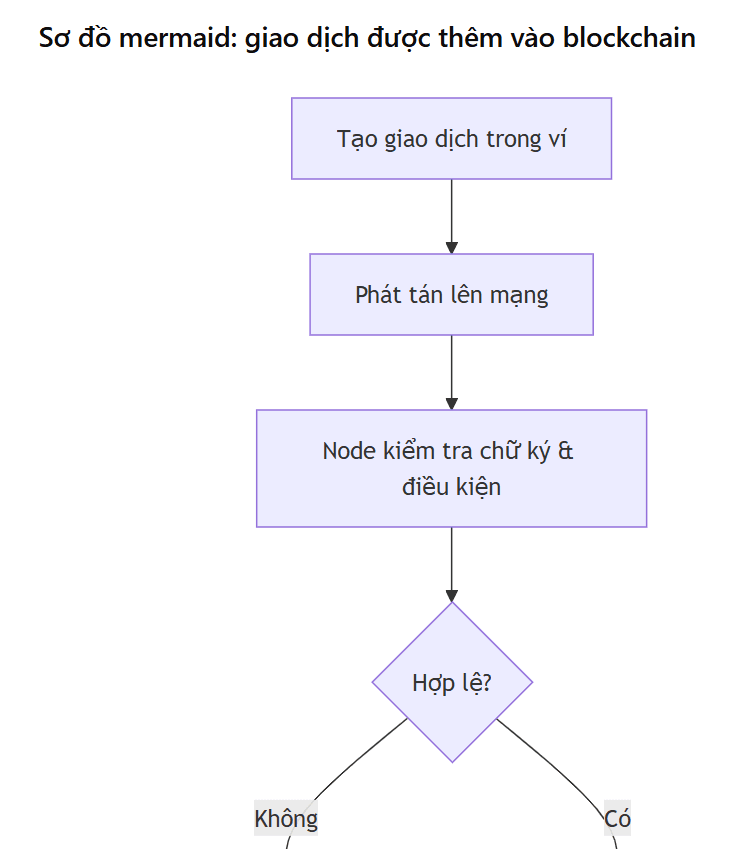
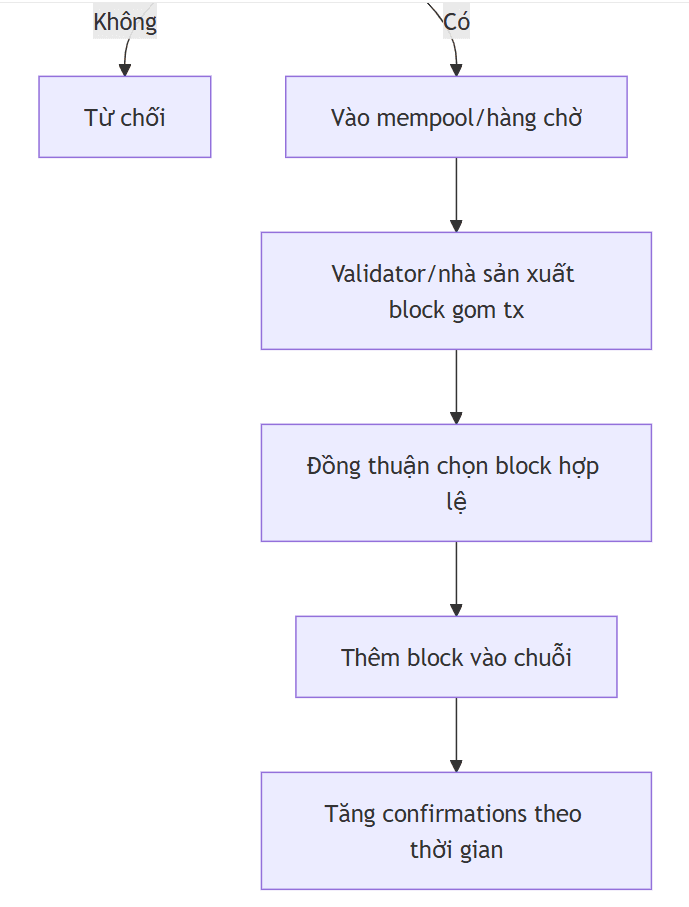
Hash & blocks: each block contains multiple transactions and a "seal" (hash). New blocks also contain the hash of the previous block, so altering data in an old block would mismatch the seal and be detected.
Consensus: rules for the entire network to choose the "correct block." Bitcoin proposed a peer-to-peer network mechanism to solve the double-spending problem in electronic payments without a trusted intermediary; Ethereum is a permissionless blockchain with a "shared computer" to run applications/smart contracts.
Common pitfalls for beginners
Fees (fee/gas) increase when many people "compete for space" in a block; long pending times are usually due to low fees or network congestion. Safety habit: try transferring a small amount before sending a large one, especially when you are new to using wallets/bridges.
What types of blockchain technology exist and how to choose quickly
The question "what types of blockchain technology exist" can be confusing because there are many ways to classify them. The simplest way for beginners is to categorize them by access rights and scaling layers:
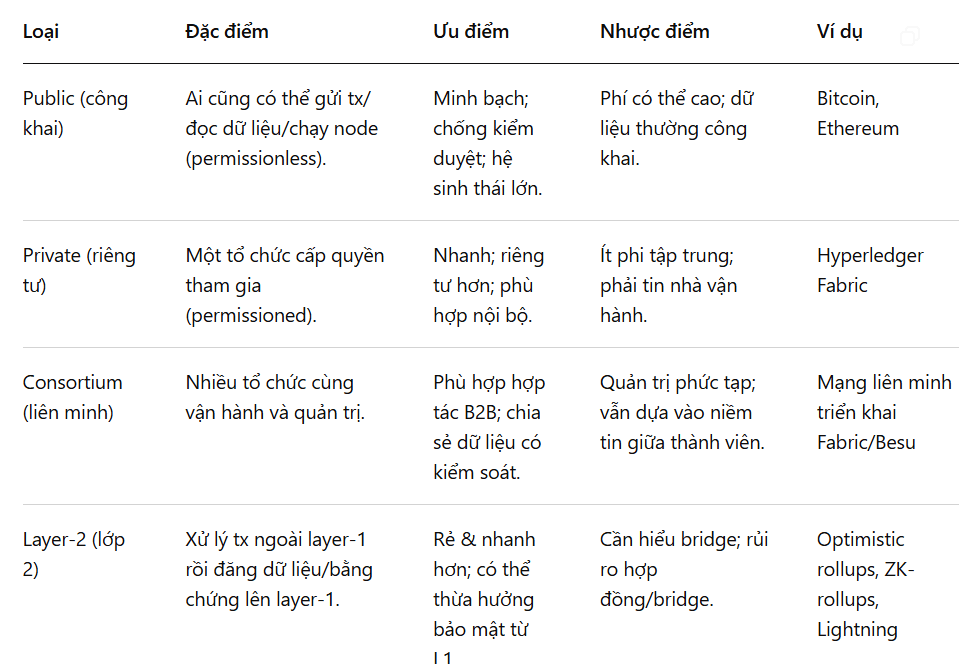
Concepts like "permissioned/permissionless," examples of Fabric (enterprise networks), and descriptions of L2 (rollups, Lightning, etc.) can be found in Hyperledger and Ethereum documentation.
A quick selection guide for new investors: large public chains are usually easy to use due to their liquidity and rich toolsets; if layer-1 fees are high, consider the official layer-2 solutions of that ecosystem (but remember to verify the correct deposit/withdrawal network).
Illustrative examples and a real-world use case
Illustrative examples
Example 1: A group of friends pooling funds. Instead of one person keeping the file, the whole group keeps identical copies of the "ledger"; anyone trying to cheat will be detected because their version will not match.
Example 2: Each page of a ledger is stamped, and the stamp of the next page always "relies on" the stamp of the previous page. Altering an old page would break the entire chain of stamps behind it—that is the intuition behind hash linking between blocks.
Real-world use case: transferring stablecoins via Layer-2 to save on fees
When Ethereum layer-1 is busy, the cost of transferring stablecoins can rise. Many users utilize optimistic rollups or ZK-rollups to process transactions off-mainnet and then post the results/proofs to Ethereum; Ethereum docs describe rollups as L2 solutions that can increase throughput by "moving computation off-chain" while remaining anchored to layer-1 security.
FAQs for beginners
Is blockchain "unhackable"?
No. Blockchain makes altering history very difficult, but wallets, exchanges, smart contracts, and bridges can still have bugs or be attacked.
Do I need to learn PoW/PoS to invest?
You do not need to study them deeply, but you should understand that consensus is how the network decides "which block is real," which affects fees, speed, and reliability.
Why are transactions pending for a long time?
Usually because the fee is too low relative to demand or the network is congested. Check the explorer; do not resend repeatedly if you do not understand the status.
Conclusion and assumptions
Blockchain is a "shared ledger" infrastructure for digital assets: data is grouped into blocks, linked by hashes, and confirmed via consensus. For crypto beginners, understanding this foundation helps you reduce errors when transferring funds and choose the appropriate network.
Assumption: The current date is understood to be 2026-02-27; if the source does not state a date, the content is considered applicable at this time, and official/updated documentation is prioritized.
Related articles from WEEX
- What is War Coin Crypto? Explaining the concept of War Coin for beginners
- Crypto tax policies in selected countries: the US, the EU, Japan, South Korea, and Vietnam
- Why did the price of bitcoin drop sharply at the beginning of 2026? What will bitcoin's price be like in 2026 for beginners | WEEX Crypto Wiki
Open a crypto trading account on WEEX
WEEX provides:
- A simple, easy-to-use interface, even for those who have never invested before.
- 24/7 customer support in Vietnamese, answering all questions quickly.
- A multi-layer security system, ensuring your assets are always safe.
- An in-depth investment knowledge base, helping you track market trends and make accurate decisions.
WEEX is the ideal choice if you are looking for a reputable platform to start your crypto investment journey and explore potential AI projects.
Disclaimer:
WEEX and its affiliates provide digital asset exchange services, including derivatives and margin trading, only where legal and for eligible users. All content is general information, not financial advice—seek independent advice before trading. Trading cryptocurrencies carries high risk and can result in total loss. By using WEEX services, you accept all risks and related terms. Never invest more than you can afford to lose. See our Terms of Use and Risk Disclosure Statement for details.