
TradFi vs. Crypto: Why Banks Are No Longer Fighting Blockchain

Just a few years ago, the relationship between the traditional financial system and the crypto industry looked like an open war. Banks criticized Bitcoin, regulators increased pressure on crypto exchanges, and financial sector representatives called digital assets a bubble and a threat to the global economy.
However, by 2026, the situation has changed radically. Instead of conflict, the market is witnessing a gradual convergence of TradFi and the crypto industry. Major banks are launching blockchain products, institutional investors are entering digital assets, and stablecoins are beginning to compete with traditional payment systems.
Today, the question is no longer whether crypto will replace banks. The main question is how exactly traditional finance will integrate blockchain into the existing system.
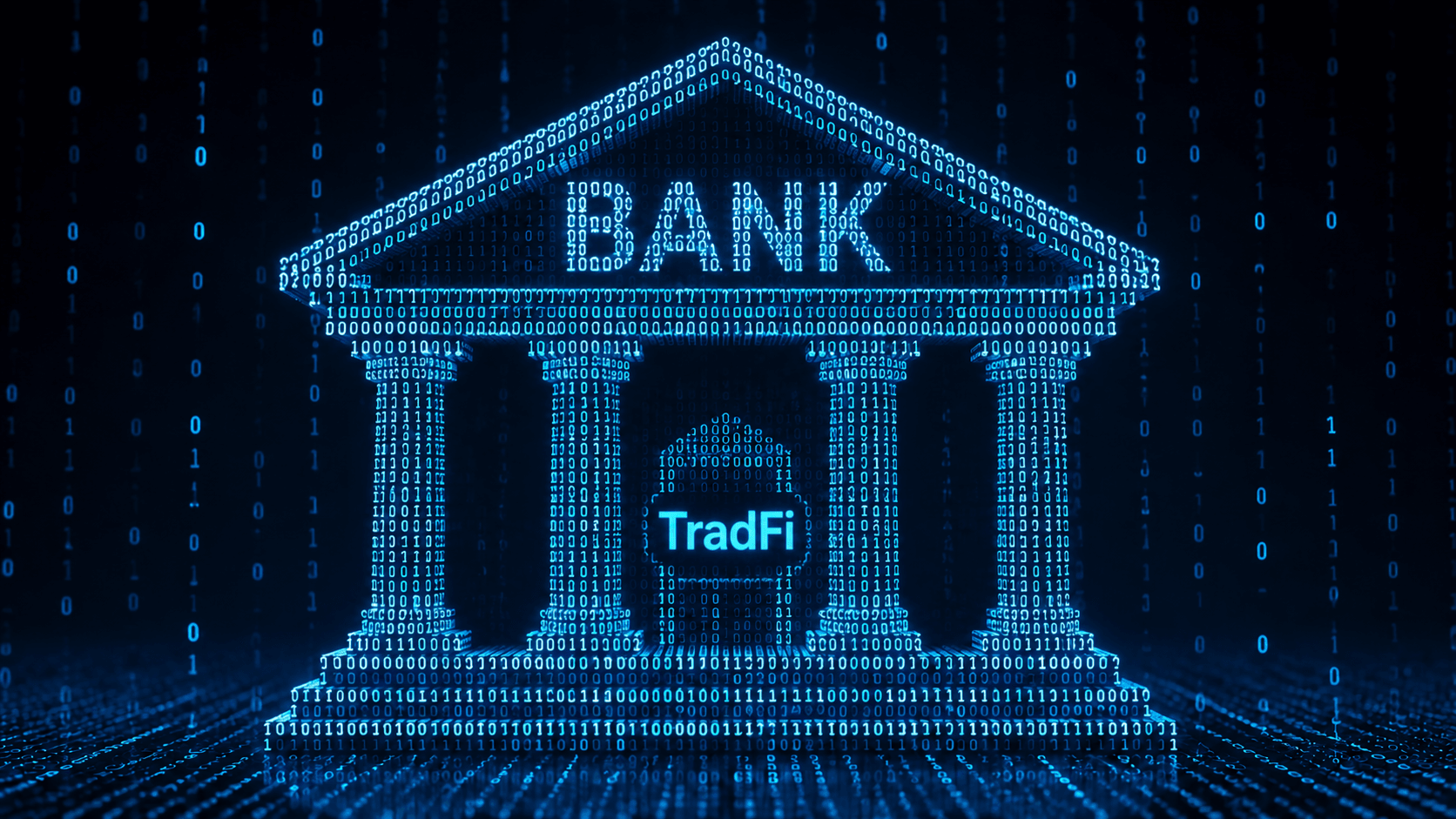
What is TradFi
TradFi (Traditional Finance) is the traditional financial system:
- banks
- stock markets
- brokers
- payment systems
- government regulators
This model is built on intermediaries and centralized management. Every financial transaction passes through organizations that verify transactions, hold funds, and ensure compliance with rules.
The crypto industry was originally created as an alternative to this system. Bitcoin emerged after the 2008 financial crisis as an attempt to remove intermediaries from money transfers and return control over assets to users.
But instead of completely destroying TradFi, the market has gradually moved toward integration.
Why banks stopped fighting crypto
1. A market too big to ignore
Cryptocurrencies are no longer a niche industry. By 2026:
- digital assets have become part of the global financial system
- institutional funds are actively investing in Bitcoin and Ethereum
- major exchanges are working with millions of users
After the launch of Bitcoin ETFs, the crypto market gained additional legitimacy. It became obvious to banks that the demand for digital assets would not disappear.
Instead of trying to ban the market, financial organizations began looking for ways to profit from it.
2. Stablecoins are changing international payments
One of the main factors in the convergence of TradFi and crypto has been stablecoins.
USDT and USDC have effectively become digital equivalents of the dollar:
- international transfers are faster
- fees are lower than bank fees
- access to settlements has become global
This is especially noticeable in CIS countries, Asia, and Latin America, where stablecoins are already used for:
- P2P settlements
- salary payments
- cross-border trade
For banks, this was a signal: blockchain is capable of competing with classic financial infrastructure.
Tokenization — the main trend of 2026
While banks previously viewed blockchain as a threat, they are now actively using it for asset tokenization.
Tokenization is the conversion of real-world assets into digital form on a blockchain.
Assets that can be tokenized include:
- stocks
- bonds
- real estate
- gold
- funds
Why this is beneficial:
- faster settlements
- reduced costs
- increased liquidity
- simplified access to investments
Many analysts believe that tokenization will become the primary bridge between TradFi and the crypto industry.
Banks begin using blockchain
Large financial organizations have stopped perceiving blockchain solely as a "technology for crypto."
Today, banks use it for:
- international transfers
- inter-organizational settlements
- digital asset custody
- issuing tokenized products
In parallel, crypto storage infrastructure is developing. Banks are launching custodial services that allow institutional clients to work with digital assets securely.
In effect, the market is moving toward a model where crypto becomes another asset class within the traditional financial system.
Why DeFi has not yet replaced TradFi
Despite the growth of DeFi, traditional finance maintains a strong position.
The reasons are clear:
- government support
- legal protection for clients
- clear regulation
- high stability
DeFi remains an innovative but risky segment:
- protocol hacks
- lack of insurance
- high volatility
- uncertain regulation
Therefore, most major players prefer not to replace TradFi, but to integrate specific blockchain solutions into the existing system.
The end of the fight between TradFi and crypto
In 2026, it is clear that the era of confrontation is coming to an end.
Banks have realized that blockchain:
- does not destroy the financial system
- but makes it faster and more efficient
The crypto industry, in turn, has begun to adopt elements of traditional finance:
- regulation
- KYC
- institutional standards
- compliance procedures
As a result, a hybrid model is forming where TradFi and crypto are gradually merging.
Conclusion
Just a few years ago, it seemed that traditional banks and cryptocurrencies were on opposite sides of a financial revolution. However, the market has shown a different scenario.
Today, TradFi is not fighting blockchain — it is adapting to it.
Stablecoins, tokenization, and institutional investments are changing the financial system faster than expected. Banks are no longer trying to stop crypto because they have realized that blockchain technologies are becoming part of the new global economy.
That is why the main trend of the coming years is not the conflict between TradFi and crypto, but their gradual merger.
Where to trade TradFi in 2026?
- KYC and 2FA for security
- Low fees
- Support for many cryptocurrencies: ETH, SOL, ADA, and others
- Instant order execution
- Bonuses and coupons for new users - up to 30,000 USDT!